Jordan Bliss explains why passive fire issues keep cropping up, and how to stop them wreaking havoc on your construction programme.
Jordan is a Senior Fire Engineer who has been with EDC for over a decade. His early background as a Structural Engineer and his ‘hands-on’ attitude have equipped him to help solve thorny issues that other firms shy away from. If you have a tricky project and need some fire engineering advice, contact Jordan on 021 345 858 or reach out at jordan.bliss@edc.co.nz
Sick of hearing about Passive Fire?
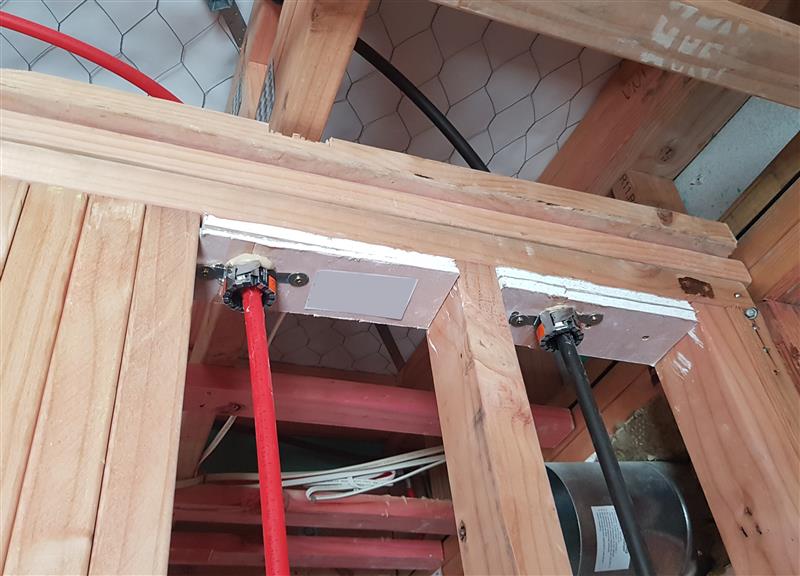
You think you’re in the clear. Building Consent has been issued, framing has gone up, and linings are underway. Then Council starts failing inspections for ‘passive fire issues’, and no one seems to know what they want or how to fix it. It’s not just firestopping collars, but lining issues, risers, expansion gaps and steel protection. Your passive fire subby points at the builder, the builder points at the fire engineer, the fire engineer points at the architect, and all the while you’re getting further behind schedule. Don’t even get me started on ‘post-fire stability’.
We see this happen all too often – construction details for fire separations can be incredibly difficult to get right, and if you put off thinking about them until the building is halfway complete you can get locked into expensive and inefficient solutions. Large projects often employ a specialist ‘passive fire designer’ to help the architect design and draw up these details, but on small-to-medium sized projects there isn’t the budget for yet another consultant, so you need to rely on your other consultants to really know what they’re doing.
Most fire engineers don’t want anything to do with it – they’ll say something about a ‘performance based design’ and ‘PN22’ and that everything is the architect’s responsibility. But the architect has a lot to think about and often doesn’t have the background understanding to make fire safety detailing decisions with confidence.
EDC’s Point of Difference
We offer solutions, not problems. Over the years we’ve come across all sorts of construction detailing issues, and each time we’ve made it our mission to figure out a solution instead of pointing at someone else to fix it. We’ve also been able to draw on our in-house structural engineering knowledge and our passive firestopping training to fully understand what is required and ensure our solutions will actually work. We’ve developed a knowledge base of common issues and their solutions and even have a library of typical details we’ve developed for risers, firewall junctions, and common penetration solutions.
EDC will often delve into the architect’s details while these are being prepared for Building Consent and apply our experience to head off common issues while they are still just lines on paper, before they become constructions issues requiring demolition to resolve. We get great feedback from architects, who feel the weight of fire safety compliance on their shoulders and appreciate a hands-on review from an engineer, as well as the level of detailed advice we provide (often with sketched suggestions). This reduces Council RFI’s, and gives everyone a sense of security that the building will actually be safe in a fire.
When the worst happens, and issues start cropping up during construction for which there is no construction detail in the plans, EDC can visit the site and run through the options, often providing a Consultants Advice Notice with sketch details of how to fix the problem suitable to be approved by Council as a Minor Variation. This can be a lifesaver for the construction programme, getting a quick, buildable solution instead of having to wait for advice from the passive fire subby, the architect, the structural engineer and the fire engineer and then coordinate them all together.
The Cherry on Top
Our familiarity with construction detailing and passive firestopping is incredibly useful when dealing with existing buildings, not just new builds. If you have a building with passive fire BWoF issues, unconsented works, or an upcoming reclad, get us along to view the property. We can help identify how the building was constructed, what defects are likely to be exposed during the works, give advice on the relative level of risk, and provide options to remediate any issues. We have a ton of experience dealing with Section 112 ‘Gap Assessments’, and providing ‘as near as reasonably practicable’ (ANARP) justifications – we can help you fix the highest-risk safety issues and achieve Building Consent, without the scope of upgrades ballooning out of control.
Get in touch and make use of our helpful, solutions-focused fire engineering services!